
NXP MC33880PEWR2: A Comprehensive Technical Overview of the 8-Channel Serial Switch Interface IC
The NXP MC33880PEWR2 is a highly integrated, serial-controlled 8-channel low-side switch interface IC, designed primarily for automotive and industrial applications where robust performance and diagnostic capabilities are paramount. This device serves as a critical interface between a low-power microcontroller (MCU) and high-current peripheral loads, such as lamps, solenoids, or motors, simplifying system design and enhancing reliability.
Core Architecture and Functionality
At its heart, the MC33880PEWR2 features eight independently controllable low-side NMOS power switches, each capable of handling continuous currents up to 500 mA. The channels are organized into two groups of four, each with a common supply voltage connection, allowing for flexible power management. Control is achieved via a simple Serial Peripheral Interface (SPI), enabling the MCU to command all eight channels, read back their status, and obtain detailed diagnostic information with minimal GPIO pin usage.
A key architectural strength is its integrated protection and diagnostic circuitry. Each channel is equipped with overload and short-to-battery protection. In the event of a fault, the device automatically limits the output current to prevent damage. Crucially, it does not simply shut down; it reports the specific fault condition (overcurrent, open load, or overtemperature) back to the MCU through the SPI interface. This allows for sophisticated system-level responses, such as logging errors or implementing retry strategies.
Key Features and Specifications
SPI Control: A versatile 4-wire SPI (CSB, SCLK, SDI, SDO) allows for daisy-chaining multiple devices and provides a dedicated path for comprehensive diagnostic feedback.
Robust Protection: Features include overcurrent limitation (OCL), thermal shutdown with automatic restart, and inductive load clamping.
Diagnostic Capabilities: The IC can detect and report open-load conditions both in the on and off state, as well as output short circuits to battery (VBAT).
Automotive Qualification: Designed to meet the stringent requirements of the AEC-Q100 standard, ensuring reliability in the challenging automotive environment (-40°C to +125°C junction temperature).
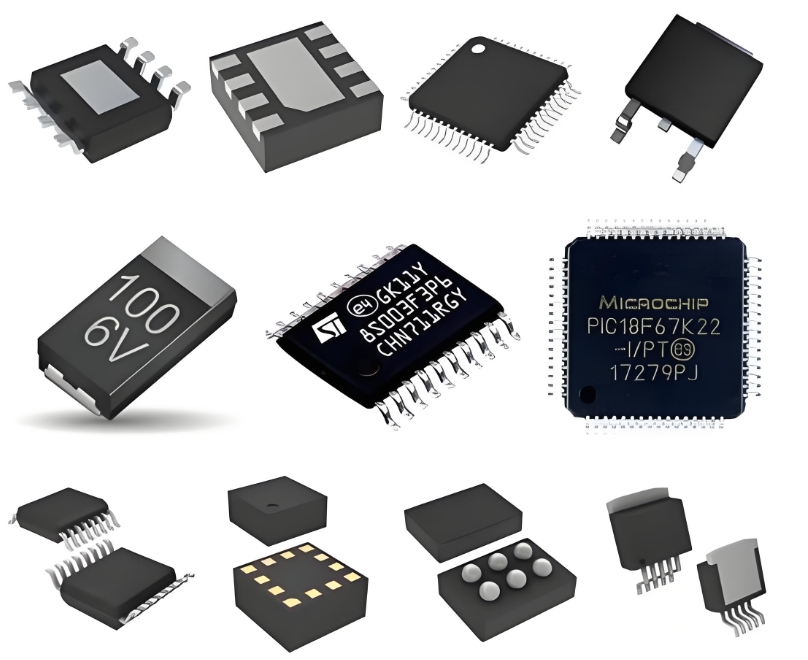
Package: Housed in a space-efficient 20-pin TSSOP package, suitable for compact PCB designs.
Application Scenarios
The MC33880PEWR2 is ideal for a wide range of applications where multiple low-side loads need to be digitally controlled. Its primary domain is automotive body control modules (BCMs), where it is used to drive interior lights, turn indicators, door locks, and window motors. Its diagnostic features are essential for meeting automotive safety and reliability standards. Beyond automotive, it finds use in industrial control systems, factory automation, and any application requiring multiple protected switch channels.
Advantages in System Design
Integrating the MC33880PEWR2 into a design offers significant advantages. It drastically reduces the component count compared to using discrete MOSFETs and drivers, saving board space and cost. It offloads critical protection functions from the MCU to a dedicated hardware solution, increasing system robustness. Furthermore, its diagnostic capabilities enable predictive maintenance and easier troubleshooting, reducing warranty and service costs.
ICGOODFIND: The NXP MC33880PEWR2 is a sophisticated and robust solution for multi-channel switching tasks. Its integration of power switches, SPI control, and advanced diagnostics into a single package makes it an exceptional choice for designers seeking to enhance reliability, simplify architecture, and meet stringent automotive-grade requirements in their electronic systems.
Keywords:
1. SPI Interface
2. Low-Side Switch
3. Diagnostic Capabilities
4. AEC-Q100
5. Overcurrent Protection

